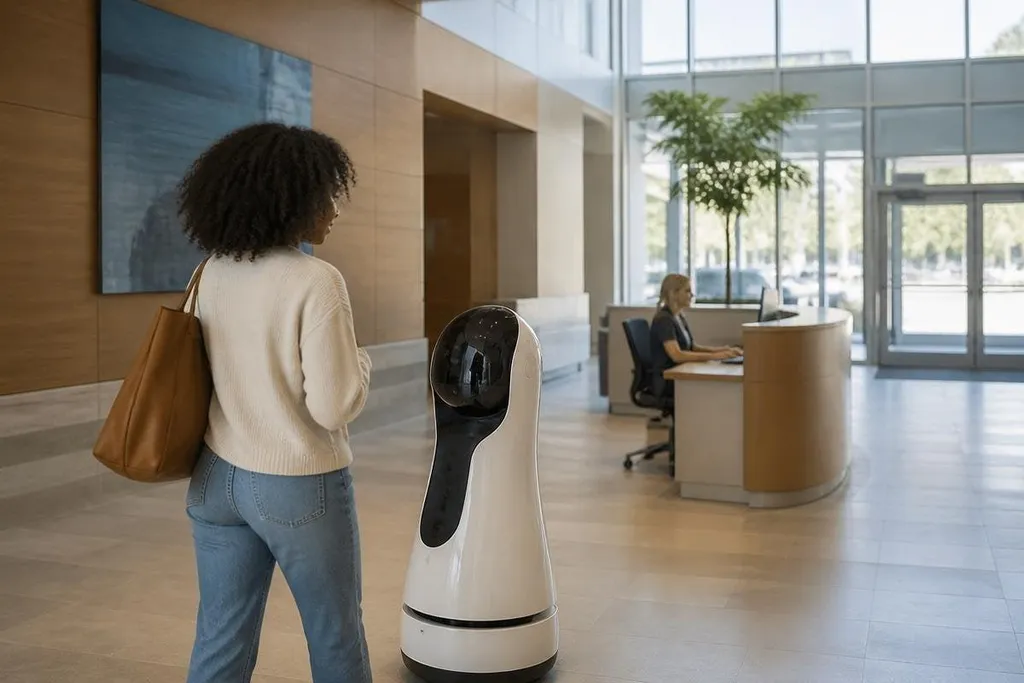
A support robot can greet a visitor, answer a known question, or pass a request to a person. Its value depends on how well that small job fits the place, the staff, and the customer.
- Answer repeat questions at a desk or entrance
- Collect basic details before a human takes over
- Give staff a clear record of each request
Start with the task customers repeat
Customer service covers many different problems. Fixed questions about opening hours, room locations, order status, or the next step in a service process suit a robot. It will struggle when the request needs judgment, private account data, or a long explanation.
That boundary should shape the project from day one. A company might place the robot in a lobby, where it can greet visitors and direct them to the right desk. A retailer might use one to answer product-location questions, while staff handle refunds and damaged goods.
The useful measure is not how much the robot can say. It is how many routine requests reach the right answer without taking a worker away from a harder case.
How the handoff should work
A customer needs a clear route to a person when the robot lacks the answer. The robot can ask for a short description, record the request, and send that information to a staff member. That gives the person a starting point instead of making the customer repeat the whole exchange.
Speech recognition is only one part of this process. The robot also needs a screen, buttons, or another simple way to confirm what it heard. In a noisy shop or a busy transport site, a customer should be able to correct the robot without starting over.
The handoff must also show its status. A screen can say that a staff member has received the request, while a queue system can show where the person should wait. Those small details matter because silence makes a short delay feel longer.
Reports on customer service robots from Robot24.com can place the robot’s task beside the staff handoff, trial setting, and result. A support manager can then judge whether the system answers routine requests or adds another job for staff.
Where the robot can help staff
A support robot can take the first step in a request and leave the harder work to staff. That may include finding a service desk, collecting a booking number, printing directions, or showing a customer how to start a standard process.
This split keeps the robot close to its limits. Staff still handle complaints, unusual requests, safety concerns, and cases that involve personal information. The robot reduces repeated explanation only when its instructions match the real process behind the desk.
That process needs regular checks. If a company changes its return rules or moves a department, the robot must receive the new information before customers rely on it. A wrong answer delivered with confidence creates extra work for staff.
The limits that decide the result
The robot cannot fix a support process that people already find confusing. If the company has several systems with different order records, the robot may pass customers between tools without solving the request.
The screen may look clean while the work behind it remains slow. Privacy adds another limit, because a robot in a public area should collect only the details needed for the next step.
Account numbers, payment details, and other private data need a clear reason to appear on the screen or enter the robot's system. Access matters too. Some customers may not want to speak to a machine.
Others may have trouble hearing, reading the display, or moving around the robot. A staffed option must stay visible and easy to reach.
A practical buying checklist
Use these checks before placing a support robot in front of customers:
- Name one task: Write the exact request the robot will handle, such as directions or order-status checks.
- Set the handoff: Decide who receives an unfinished request and what information they get.
- Test the setting: Check speech, lighting, floor space, network access, and screen height at the planned site.
- Limit private data: Remove any question that does not help solve the request.
- Plan updates: Assign a person to change answers when prices, hours, locations, or rules change.
- Keep a human route: Make the staff option clear before a customer starts the interaction.
I'd start with a robot that handles one repeated question and measure the handoffs before adding more work. Without a named deployment or test result, larger claims about better service remain unproven.
The next useful number is the share of routine requests that reach a correct answer without a staff member repeating the same steps. If that number stays low, the problem is the service process, not the robot.